Magnesium & Eye Health: Why This Mineral Matters More Than You Think
Magnesium & Eye Health: Why This Mineral Matters More Than You Think
- posted: Jan. 23, 2026
Magnesium & Eye Health: Why This Mineral Matters More Than You Think
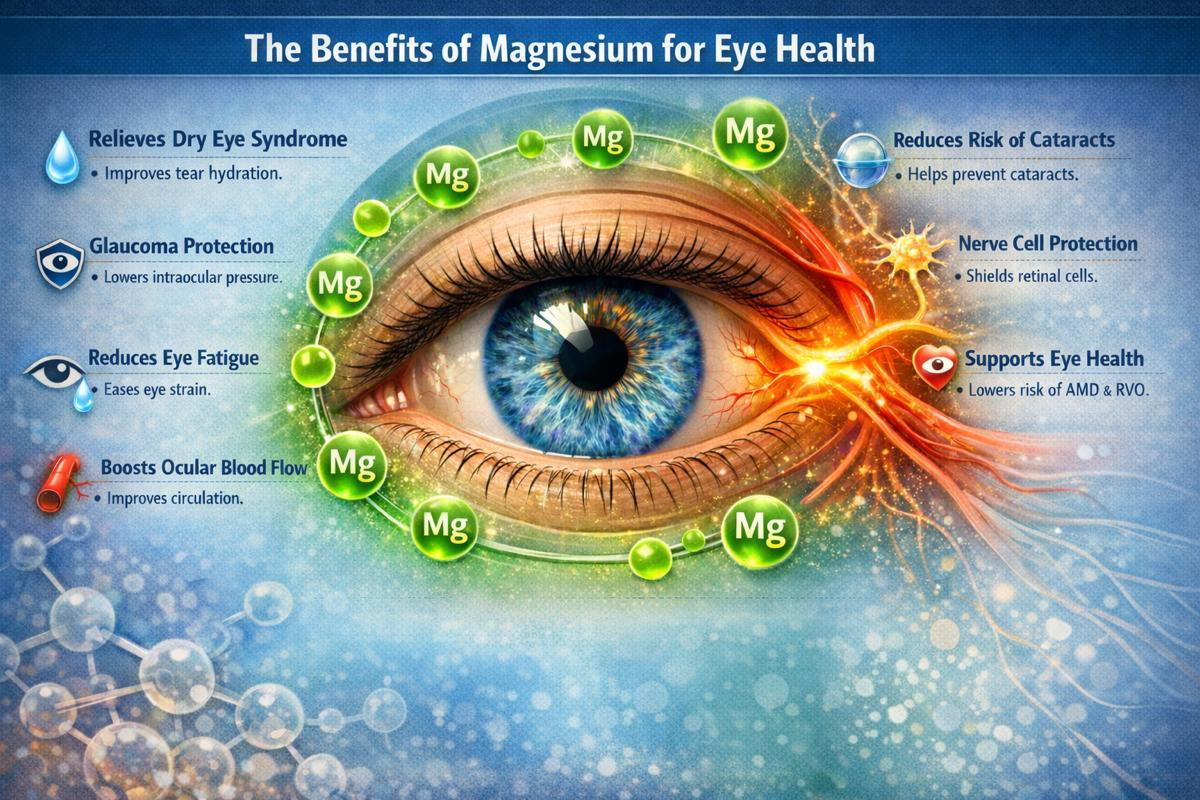
When people think about eye health, nutrients like vitamin A or omega-3s usually come to mind. One essential mineral that often flies under the radar is magnesium—yet it plays a meaningful role in supporting both visual function and overall eye comfort.
At Eye Was Framed Eyecare, we believe informed patients make empowered decisions. Understanding how magnesium supports eye health is one more way to care for your vision long-term.
What Is Magnesium?
Magnesium is a vital mineral involved in more than 300 biochemical processes in the body. It supports nerve transmission, muscle relaxation, blood vessel health, and energy production—many of which directly or indirectly affect the eyes.
Unfortunately, modern diets and busy lifestyles mean many people are unknowingly magnesium-deficient.
How Magnesium Supports Eye Health
1. Optic Nerve & Nerve Function
Magnesium helps regulate nerve signaling throughout the body, including the optic nerve. Proper nerve function is essential for clear, comfortable vision and visual processing.
2. Healthy Blood Flow to the Eyes
Magnesium plays a role in relaxing blood vessels and supporting circulation. Good blood flow is critical for delivering oxygen and nutrients to the eyes and retina.
3. Eye Strain & Muscle Tension
Because magnesium helps muscles relax, adequate levels may help reduce muscle tension associated with eye strain, prolonged screen use, and even tension-related headaches.
4. Retinal & Visual Function
Research suggests magnesium contributes to overall retinal health by supporting cellular function and reducing oxidative stress—both important for maintaining healthy vision as we age.
Signs You May Be Low in Magnesium
While only lab testing can confirm deficiency, common signs of low magnesium may include:
Muscle cramps or twitching
Headaches or migraines
Fatigue
Difficulty sleeping
Increased eye strain or tension
If you’re experiencing frequent eye discomfort, headaches, or visual fatigue, nutrition may be part of the conversation.
Magnesium-Rich Foods to Include in Your Diet
You can naturally boost magnesium levels by incorporating:
Leafy green vegetables (spinach, Swiss chard)
Nuts and seeds (almonds, pumpkin seeds)
Whole grains
Legumes
Dark chocolate (in moderation)
Some patients may benefit from supplementation, but this should always be discussed with your primary care provider.
A Whole-Body Approach to Vision Care
Eye health doesn’t exist in isolation. Nutrition, lifestyle, screen habits, and regular comprehensive eye exams all work together to support clear, comfortable vision.
If you’re experiencing eye strain, headaches, dry eyes, or changes in vision, our doctors are happy to discuss both clinical and lifestyle-based solutions during your visit.
Your eyes are connected to your whole body—and caring for both truly matters.
Schedule your next comprehensive eye exam with Eye Was Framed Eyecare and let’s keep your vision healthy for years to come.
Contact Us
Locations
11319 W 143rd St
Orland Park, IL 60467
(708) 460-2025
Hours of Operation
Although our hours may vary, we do our best to check our messages daily and respond within one business day.
10:00 am - 7:00 pm
9:00 am - 5:00 pm
10:00 am - 6:00 pm
9:00 am - 6:00 pm
Closed
9:00 am - 2:00 pm
Closed